Selecting the right CEE plugs and sockets1 can be confusing and overwhelming. With so many options available, making the wrong choice could lead to safety hazards and compatibility issues.
To choose the right CEE plugs and sockets1, first determine the required voltage (110V-690V) and amperage (16A-125A)2. Then check IP ratings for water/dust protection3 (IP44-IP67), and ensure compliance with IEC 60309 standards4 for your region's specifications.
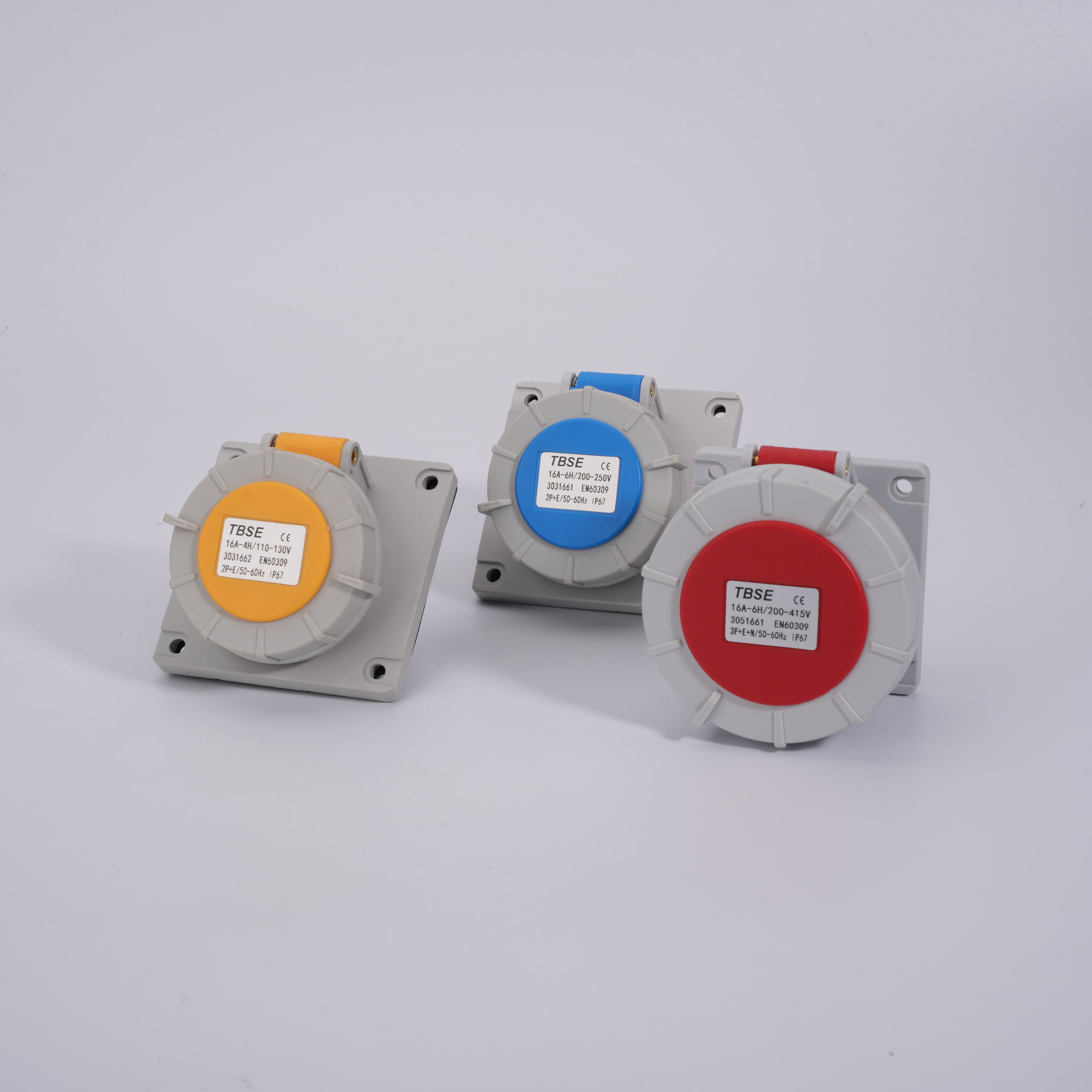
As a manufacturer with over 15 years of experience, I've helped countless customers find the perfect CEE connector solutions. Let me walk you through the key factors to consider when making your selection.
What Voltage and Current Ratings Do You Need?
Choosing the wrong voltage or current rating isn't just inconvenient - it can be dangerous. I've seen the costly damage that occurs when customers use incompatible connectors.
CEE plugs and sockets1 come in standard voltages from 110V to 690V and current ratings from 16A to 125A. The voltage determines the connector's color: yellow (110V), blue (230V), red (400V), and black (500V/690V).
When selecting voltage and current ratings, consider both your immediate and future needs. Here's a detailed breakdown of common applications:
Voltage Applications
- 110V-130V (Yellow): Commonly used for portable tools and lighting in North America
- 200V-250V (Blue): Standard for single-phase equipment in Europe and Asia
- 380V-480V (Red): Three-phase industrial equipment worldwide
- 500V-690V (Black): Heavy industrial applications and specialized equipment
Current Ratings
| Amperage | Typical Applications |
|---|---|
| 16A | Hand tools, lighting |
| 32A | Portable generators5, construction equipment |
| 63A | Industrial machinery, temporary power distribution |
| 125A | Heavy machinery, main power connections |
How Important Is Environmental Protection?
I remember a customer who installed standard plugs in a marine environment - they corroded within months. Don't make the same costly mistake.
The IP (Ingress Protection) rating indicates protection against water and dust. For outdoor use, choose minimum IP44. For wash-down areas or constant exposure, select IP67. Higher ratings mean better protection but also higher costs.
 "IP rating protection levels")
Understanding IP ratings is crucial for longevity and safety. Let me break down the most common ratings and their applications:
IP Rating Guide
- IP44: Protected against solid objects >1mm and water splashing
- IP54: Protected against dust and water splashing
- IP65: Total dust protection and low-pressure water jets
- IP67: Total dust protection and temporary immersion
Environmental considerations go beyond just water and dust:
- Temperature extremes: Choose materials rated for your operating temperature range
- Chemical exposure: Consider special materials for corrosive environments
- UV exposure: Look for UV-resistant materials for outdoor installations
- Impact resistance: Higher IK ratings for areas with physical damage risks
What About Standards and Compliance?
Using non-compliant connectors once caused a major project delay for one of my clients. Getting this right from the start is essential.
CEE connectors must comply with IEC 60309 standards4. This ensures safety, compatibility, and legal compliance. Different regions may have additional requirements like UL certification for North America or CE marking for Europe.
Standards compliance involves multiple aspects that need careful consideration:
Key Standards Requirements
-
Construction and Testing
- Material specifications
- Temperature rise limits
- Breaking capacity
- IP rating verification
-
Regional Certifications Region Required Certifications Europe CE, ENEC North America UL, CSA Australia AS/NZS International IEC, CB Scheme -
Testing Requirements
- Short circuit testing
- Temperature cycling
- Impact resistance
- Environmental testing
- Electrical safety verification
Conclusion
Choose CEE plugs and sockets1 based on voltage/current needs, environmental protection6 requirements, and compliance standards. Always prioritize safety and quality over initial cost savings.
Explore this link to gain comprehensive insights into CEE plugs and sockets, ensuring you make informed choices. ↩
Understanding amperage ratings is crucial for safety; this link provides detailed information on each rating. ↩
Learn about IP ratings and their significance in protecting your equipment from environmental factors. ↩
This link offers essential information on IEC 60309 standards, ensuring compliance and safety in your selections. ↩
Explore this link to discover top-rated portable generators that ensure reliability and safety for your projects. ↩
Discover the importance of environmental protection in connector selection to enhance durability and safety. ↩